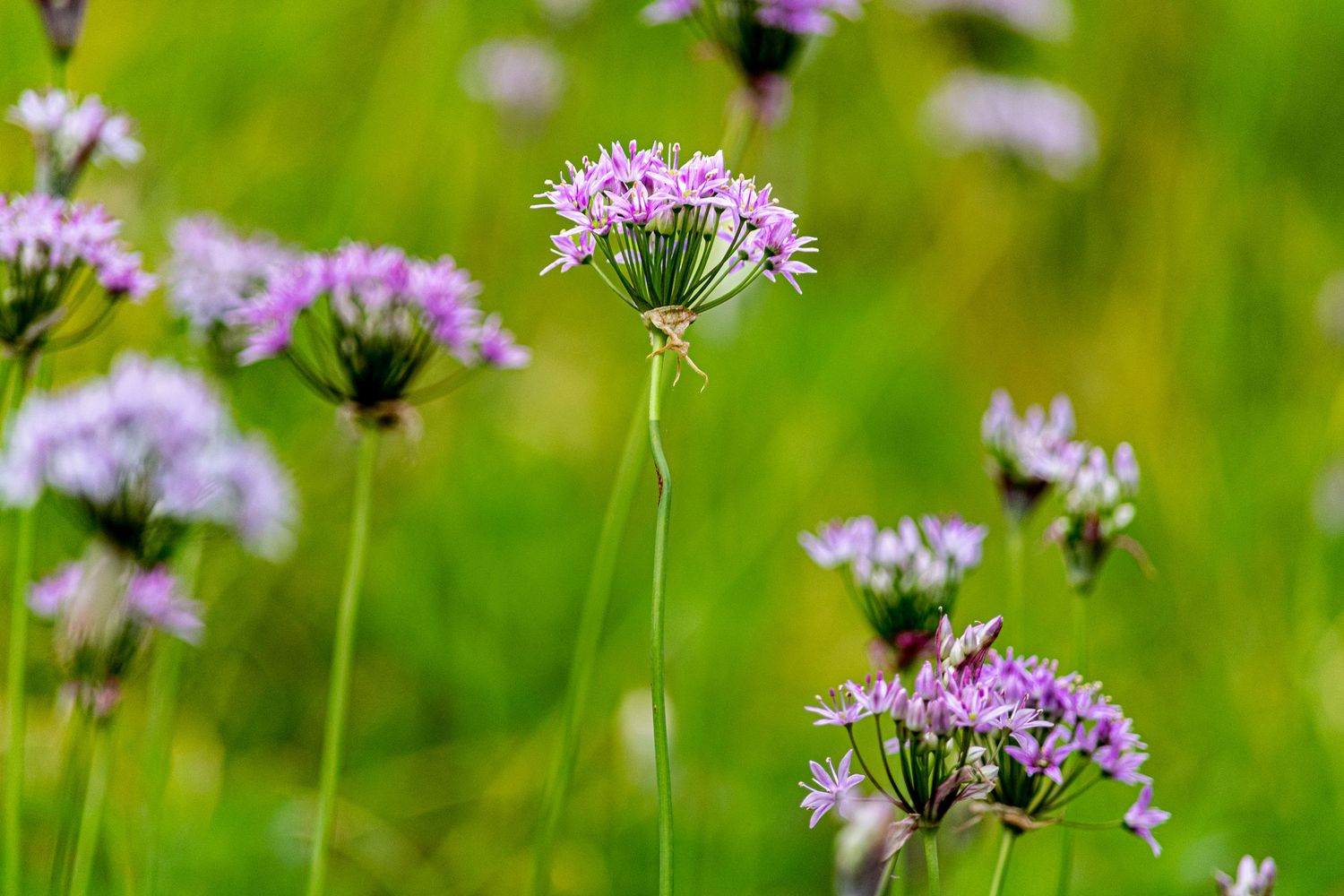
I have a question: How many mistakes must a man make before he can call himself a photographer? The answer, my friend, is floating in the Ozark dew.
Photography, at least the way Mentor Mike and I treat it, is an art. When creating art, whether you are a professional photographer like Mentor Mike or an enthusiast like myself, you have tons of choices to make, some of them in the planning and some of them with the execution of the art. Therefore, an artist has dozens of opportunities to make what some people would call a mistake.
I’ll get to my big mistake shortly, but first allow me to tell you of the things that were not mistakes.
First, the mistake I made on this trip had nothing to do with picking up Mentor Mike at 5:01 in the morning instead of 5. 5:01 was the agreed-upon departure time. Why 5:01? Because 5 is just too darn early. Leaving Mike’s driveway 60 seconds later would still allow us to set up on location and then wait for Apollo to drive his phaeton carrying the sun into the sky at which point we could photograph the Golden Hour. So leaving one minute past a round number was not a mistake.
Second, the mistake I made had nothing to do with our shoot location. We have been looking to expand our photographic repertoire so the Missouri town we selected, Plato, would give us a chance to photograph a small town as well as some water because the Roubidoux Creek flows on the western edge of the town. It was going to be the best of both photographic worlds.
Further, I like the name of the town: Plato, after the Greek philosopher. Student of Socrates, teacher of Aristotle. That is a murderer’s row of smarts. The town was founded in 1874 and I have no idea if the founder or if any of the 82 current residents know anything about Plato’s Theory of Forms, his allegory of the cave or anything that is in the book The Republic. No matter, the name has gravitas and stands out from other Ozark place-names for its its nod to thinking for the sake of thinking.
Unfortunately, we didn’t get any shots of the town—which was Plan A. Even though I had been through Plato many times, I had forgotten how small it is. At the 2020 census, it had 82 residents. I don’t know when a village becomes a hamlet, but 82 must be getting close to that number. Village or hamlet, Mentor Mike and I were still stunned by how small it is. I knew the town did not have a square, but I thought it would have a strip of 4 or 5 businesses—perhaps with benches out front so that the old codgers would have a place to sit and watch their dogs wander about. But no, we passed the school, took a breath and found ourselves past the town. We didn’t see any dogs and it was too early for any residents to be sitting on non-existent benches. Still, I do not view this as a mistake.
The mistake had nothing to do with jumping from Plan A to plan B quicker than you can say “Penelope.” Plan B was solid: photograph the creek. Roubidoux Creek is special to Mike and I because after it flows past Plato it seeps into the ground and disappears. Then it resurfaces in our hometown, Waynesville, at the Roubidoux Spring. So even though Plato and Waynesville are more than 10 miles apart as the crow flies (20 miles by road, unknown distance by cave), underground cave systems connect them.
To make Plan B work, we took an old road, perhaps the old highway, at the side of the Roubidoux bridge. We found ourselves in some deep river sand but this was still not the mistake because this turnoff also lead us to a large pasture and thick fog. We had found, accidentally, a pasture of potential. We felt like geniuses, geniuses who were getting ready to expose our Achilles’ heel.
My mistake was not in wanting to photograph the fog, but fog is a little closer to the ultimate answer. By nature, fog is mysterious and challenging. It comes, as Carl Sandburg said, on little cat feet. How strange to get steamrolled by something so quiet.
Instead, the mistake was in paying no heed to the muse of photography. You have never heard of the Muse of Photography? During my teaching career I taught a few courses on mythology and I can tell you that there is a cast of female characters called the muses. From them we get the words “music” and “museum.” The OG Greek poet, Homer, begins both the Iliad and the Odyssey with something called the invocation of the muse, a prayer requesting the muse’s assistance in telling a story artfully. I told my students that there are nine muses, but I have since discovered at tenth: Anseladia. She is the muse of photography, unaccounted for in classical poetry because she had to wait for someone to invent the camera. The Ancient Greeks invented many things (Western culture chief among them) but photography was not one of the things. Anyway, because I didn’t invoke Anseladia or pour a coffee libation on the ground, I missed what she was giving.
What Anseladia gave in abundance was dew. Lots of it. I’m not sure I have ever walked through so much dew in such a short time. After tromping about 20 yards through the tall grass my water-resistant boots were soaked through to the 10 little piggies in my socks. If I had to lay down to get a shot, I might drown.
What Anseladia was trying to tell me was to forget the fog and go with the small, intimate photos. Fog, while pretty, is hard to photograph in that the objects in it lack hard edges which gives a camera focus fits. Further, fog can fool the metering process causing the photos to be washed out. Also, fog covers color. Light waves get trapped and redirected to other places which makes the resulting photograph look like it was shot through Cream of Wheat. But I had forgotten all of that. I was, mistakenly, Hades-bent on on getting some golden sunrise behind a cottony fog as it crept, on cat’s feet, over a lush and green and wet field.
What I learned, after I gave up the fog and turned around, is that the stunning photo opportunities were at my wet feet.
First, was a stand of tall grass. I don’t know what kind as I don’t know much about grass except I can’t get it to grow in my own yard, but this stuff was around six feet tall and looked like a cousin to wheat with its golden-red tassels. But because I was late to the light party, I had trouble isolating the seedy and colorful tops. Isolation, by the way, is one of the things that makes photos pop. Check out photos you like and I bet the backgrounds are simple or blurred away which gives you only one real thing to look at.
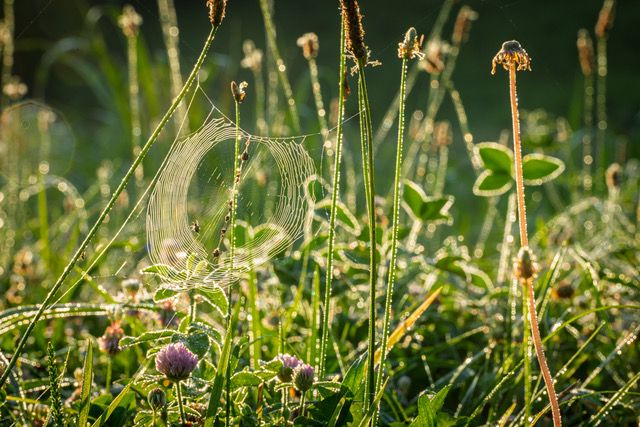
Second was a type of weed that I have seen my entire life, but I don’t know its name. No matter, I doubt it would turn around if I called it. I just know these weeds as the things, if looped and pulled, can fire their heads at little sisters. A poor boy’s pop gun. These weeds were a little easier to isolate because they stood above the other vegetation, like little skyscrapers, and I could use the fog as a simple background. But the thing that would have made these plants pop was the dew—which I didn’t notice until I was editing and 20 miles away from the field. Water was all over the plants which gave each stem and leaf and kind of glow. The water droplets positioned themselves in strings as if they were pearls, amplifying little lightwaves.
Even the grass was magnificent. The thick water bent the light and worked as natural magnifiers to parts of the plant which provided visual interest. Some photographers travel with a spray water bottle to give flowers and grass that dew effect and here I was in the middle of a dew storm lacking the observational skills to capitalize. In addition, I should have put on my macro lens as it was in my camera bag waiting to get into the game. With it I could have isolated single droplets and little bugs. For the bugs, the entire solar system is that plant and to see it at their size would be amazing. As it stands, the bugs are just smudges on the edge of a wet blade of grass in my compositions.
Finally, I would have spent more time with the dandelions. Not the yellow kind, but the white snowball kind. I saw some as I was packing my gear so I took a few snaps. The white seeds were laden with dew which added volume and gave them a kind of soapy texture. If I had been listening to Muse Anseladia then I would have spent an hour with these things trying to find the perfect angle with the perfect light.
As it stands, I have to count the Plato trip as a learning experience. Mentor Mike and I kind of live by the motto “Take what is given;” I need to remember to slow down and take stock of what the real gift is. Sometimes a grand vista is the gift, but sometimes a water droplet is the answer. Maybe that is the real reason the Greeks invoked the muse and took the time to pour libations. These actions slowed them down just enough to take stock of what they were doing and how they would handle the art.
I don’t literally believe in the Muse Anseladia, but I will slow down and ask for some real divine guidance hence. As Mentor Mike says, we may be making pictures, but God created nature and we are just recording a little speck of it. Knowing our photographic purpose can help free us from rushing into some elementary mistakes.
This is a paragraph. Click edit and enter your own text. You can make changes like making the text bold, underline or italic. This is a great place for you to tell your clients more about your story and to describe the type of photographer you are. You can come back at any time to make more changes.